Friday, April 4, 2014

Pampa River

The River Pampa (Southern Ganga)- The Divine River
The pampa River considered as the Dakshina Ganga (Southern Ganges) due to its association with Kerala's Largest Pilgrim Centre - Sabarimala is the third longest river in the South Indian state of Kerala after Periyar and Bharathappuzha and the longest river in the erstwhile princely state of Travancore.                    

Sabarimala and Pampa
Sabarimala temple dedicated to Lord Ayyappa is located on the banks of the river pampa. The River pampa enriches the lands of Pathanamthitta District and the Kuttanand area of Alappuzha District. Pampa originates at Pulachimalai hill in the Peerumedu plateau in the Western Ghats at an altitude of 1650 metres and flows through Ranni, Kozhenchery, Tiruvalla, Chengannur, Kuttanad, Karthikapally, and Ambalappuzha Taluks (approximately 176 Kms)  and finally empties into the Vembanad Lake.A famous Anjana temple is situated near this bank. This river enriches the Pathanamthitta, Alappuzha districts of Kerala state. Kuttanad, an important rice cultivating area in Kerala gets the irrigation water from the pampa river. The pampa basin is bounded on the east by the Western Ghats. The river shares its northern boundary with the Manimala River basin, while it shares the southern boundary with the Achankovil River basin.Lord Ayyappan (Sri Dharmasastha) appeared to the Pandalam Raja as a child on the banks of the pampa River.

The pampa River has been venerated as Dakshina Ganga, and devotees of Lord Ayyappan believe that immersing oneself in the pampa is equivalent to bathing in the Holy Ganges River.  Bathing in the river, believed to absolve one's sins, is a requirement before commencing the trek through the forest to the Ayyappan Temple atop Sabarimala (pampa snanam, sarva paapa vinasanam) .The Pampa water purifies one from curse and evil. Neelimala, Appachimedu, Sabareepeedam, Saramkuthi are the other divine places enroute. At Pampa also there are a few pilgrim sheds. 

If one takes bath in the pampa, he will feel the freshness and as if all his tiresome is removed and he is being rejunevated. One can experience the energy being injected into the body after taking the holy bath in pampa. After walking from Erumely to pampa, if one takes his bath in pampa, one can experience that all the body pains which had been there during the walk will just vanish like anything and one can feel that freshness and vibrant energy flowing into the body. With this rejunevated energy and the eagerness to have the darshan of lord ayyappa one will easily go ahead to sabarimala.The most auspicious part of Pampa is the Triveni Sangamam which is the right of pampa bridge.Two branches of the river merge and this point is called Triveni Sangamam.Triveni offers salvations to forefathers.It is believed that Lord Rama during his stay in the forest reached Triveni and offered tarpan to his father.Due to this devotees take a dip at Triveni sangamam often balitarpan to their forefathers as per the rituals on the sandy banks of the river.Triveni area is  known for its rich herbal wealth and flora and  may be due to its purity and medicinal wealth that augments the health of the devotees.

Responsibility of the devotees and the board
Every year, 2-2.5 crore pilgrims visit the temple town in the forests of Sabari hills. The congregation peaks in November-December and the second week of January. The past few decades have seen a huge rise in numbers. But infrastructure has not kept up with the influx, making it one of the most polluted places in Kerala. Sanitation facilities are inadequate and almost all the solid waste generated around the temple area ultimately reaches the Pampa. Travancore Devasthanam Board is trying its best to keep the sanctity of the river and provide facilities to the visiting devotees (pilgrims). Apart from the board, it is the individual responsibility of the devotees to protect the sanctity of the holy river. Devotees should take care not to pollute the river by dumping all the material into pampa. Use public toilet facilities provided by devasthanam board and not to pollute the river. Let everybody behave responsible to keep the holiness and purity of the sacred river. Previous years, Mata Amritanandamayi mutt volunteers have taken the pampa cleaning drive and removed all the dirt and waste material which had got accumulated in pampa river. But why should one spoil the sanctity of the river and why should someone volunteer to remove the waste material. What if mata amritanandamayi mutt didnt took the initiative and volunteered to clean the river. Why should devotees visiting sabarimala not behave with responsibility. Let everyone should feel that this is our country, our place. Will a devotee do the same thing in his house by dumping all the dirt and waste in his hall,bedroom, kitchen, varandah etc. In the same way, the devotee should feel that sabarimala is his fathers abode and not spoil it and try to keep it pure and clean.

Aranmula temple uthruttathi vallam kali (the snake boat race)
Apart from the pilgrims and devotees taking holy bath in pampa, pampa which is the life line of Central Travancore has also gifted keralites with a cultural gift of Snake Boats(Chundan valloms). The major snake boat races are conducted in the Pampa waters at various localities, via Ayroor, Malakkara, Chengannur, Mannar, Neeretupuram, Payipadu, Pulinkunnu and Allapuzha as well as Aranmula. The snake boat race (chundan Vallom kali) is one of the important "Traditional Game" in Kerala.One of the most important boat races is being conducted at Aranmula in the River Pampa. Aranmula Boat festival is connected to the Annual Onam Festival of Kerala. Annually about 35 Snake boats other wise called 'Palliyodams' participate in the Aranmula 'Uthruttathy Jalolswom'. The Aranmula Jalolswam is steadily and fast growing into a great international event in India. The Aranmula Boat race is the biggest domestic tourist event which attracts millions every year. This spectacular regatta has found its own place in the international tourist map and every year a large number of tourists come over to Kerala to watch this boat race."Palliyodams" are given the sanctity of a temple due to faith in the presence of the deity. "Parthasarathy" (Lord Krishna), of the holy shrine of the Aranmula Temple. Snake boat pageantry is held as a part of the anniversary celebrations of the 'Idol' installation of Aranmula Parthasarathy Temple believed to have been held centuries ago on an Uthruttathy day in Chingam, 1st calendar month of Malayalam Era. This legendary festival is a great annual event of Central Travancore. It has religious, artistic and social overtones. No where else in the world would there be such an event with millions of people taking part ( one Eanam and Thalam). It has no parallel as it is commemorative of an ancient tradition rooted about 600 years in history. The Aranmula Jalolswom is steadily growing into a great international event in India and abroad. The "Discovery Television channel has beamed the beauty of the Aranmula Snake boat race all over the World.Aranmula Boat race has manifold significance.


It has contributed immensely to the communal harmony as it has become a cosmopolitan, social event, participated by people of all religions, age and creed. It attracts thousands of domestic and foreign tourists. Unlike the sporting and competitive aspects of other boat races artistic, social and religious too aspects are given importance. PERUNTHENARUVI  (36 km from Pathanamthitta via Vachoochira)The Perunthenaruvi waterfalls on the banks of the pampa river is a favourite picnic spot for both domestic and foreign tourists MARAMON CONVENTION 

Started in 1896, the Maramon Convention is held annually by the Mar Thoma Evangelistic Association (MTEA), the missionary wing of the Mar Thoma Church. It is on the banks of the River pampa at Maramon near Kozhencherry in Pathanamthitta District. Usually held in the month of February, the convention is attended by thousands from all over India, and is a centre of Christian culture and influence. The annual weeklong gathering is a great occasion for listening to evangelists and eminent exponents of the Bible from around the world. 

Missionaries of the Evangelistic Association also come and share their experiences with the believers.Maramon and Kozhencherry, on the banks of the river Pampa 7 kilometres. CONVENTION CHERUKOLPUZHA  Ayiroor Cherukolpuzha religious convention is another important annual feature on the river bed of pampa. This famous Hindu religious convention is attended by a large number of people and addressed by prominent religious scholars and cultural personalities PARUMALA

It is here that Mar Gregories Metropolitan the declared saint of Malankara Orthodox Church takes his eternal rest . The ormapperunnal celebrated on the first and second of every November, is very famous at this time a large number of people flock to this place for worship .The Travancore Devasam board has setup here a collage known as pampa college DEVASWOM BOARD PAMPA COLLEGE, PARUMALA 

Devaswom Board Pampa College, Parumala was established in 1968 to offer quality higher education to the students in and around Mannar and the nearby areas in various taluks of Aalappuzha and present Pathanamthitta districts.The college became a Centre of Post Graduate studies with the affiliation of M.Sc.Mathematics course in 1984-85 and in 1995-96, M.Sc. Physics course was started. In 1997-98 a vocational B.Sc. course was started with Botany main and B.A.English vocational was started in 1998-99, followed by M.Sc. Chemistry in 2000-01.The college was affiliated to 12(f) of University Grants Commission, paving way for high standards in education and infrastructure. CHARALKUNNU 

Charalkunnu is a picturesque hill station from where one can have a panoramic view of the low lying areas including that of the sinuous river Pumpa. There is a comfortable camp house which has both rooms and dormitories.Charalkunnu is also renowned as a religious centre for Christians, for its many Convention centers organizing holy preaching from Bible. 

This is a picturesque hill station, where the panoramic view of valleys merges with that of the sinuous river pampa. From rooms and dormitories to comfortable camp houses in dense forests, the place has everything to fulfill your accommodation facilities. KADAMMANITTA 


Kadammanitta, a village only 8 kms away from Pathanamthitta is famous for padayani,which is an important ritual art performed in the premises of the Kadamanitta .Devi Temple. This art from is an offering for the mother goddess. it is celebrated every year from the first day of Medam (Malayalam -era)to the 10th day (pathmudayam). Nearest Bus Station - Patthanamthitta Patthanamthitta to Kadammanitta - 8kms. KAKKI 
Kakki reservoir, set in sylvan background, is a 'tourists' delight. The splendid artificial lake offers exhilarating boating experience . The surrounding forest abounds in tigers, elephants, deers and monkeys.Kakki Reservoir is an artificial lake, located in Pathanamthitta district of Kerala, India. 

The lake, which was created when Kakki and Anathode dams were built, is on one of the tributaries of pampa, the Kakki tributary. The dams were built in 1966 as part of the Sabarigiri Hydroelectric project. Full reservoir level (FRL) is 981.45 meters above sea level according to  the operators of the "twin" reservoirs, the Kerala State Electricity Board.The reservoir, which is also a tourist spot, is nestled in the Pathanamthitta reserve forest, very close to the Western Ghats.  (From Wikipedia, the free encyclopedia)


Wednesday, December 18, 2013

Ayyappa Swamy Story - Boothanaathopaakhyaanam


The Boothanaathopaakhyaanam is the main Puraana related to Dharma Saastha or Ayyappa. Dharma Sastha is also known as Boothanaatha, because from Him-the supreme Reality – evolved the Pancha bootha -s, the five elements, or the five phases of evolution from the subtlest to the grossest, as Aakaasa (the physical space), Vaayu (the gaseious stage), Aghni (the fiery stage, or the stage of chemical combination), Apa (the stage of liquidity) and Prithvi (the stage of solidity).

Brahma, Vishnu and Siva are described in the Puraanas as the three major divine aspects of  supreme Reality associated with creation, maintenance and dissolution of the universe. These Divinities, granting the prayer of a Rishi-couple Athri and Anasooya, took a partial manifestation as their son Datta. The consorts of the Divinities also thereupon took a partial manifestation as Leela, the daughter of another great Rishi. Datta eventually married Leela and after living a few years of conjugal love, he wanted to renounce the worldly life and engage in spiritual disciplines to transcend his conditioned being and to be one with his greater existence.But Leela would not agree to this. She wanted to continue the life of mundane pleasure in the company of Datta, who tried to convince her that one can never find lasting contentment in a lustful life. But Leela was adamant. An enraged Datta cursed her to be born as a Mahishi, a senseless shebuffalo to satisfy her desires. 

In course of time, Leela took birth as a bizarre creature with the head of a she-buffalo and the body of a woman. She was very powerful because of her divine origin, but very dull-witted because of her buffalo nature. She did intense penance and propitiated Lord Brahma, who granted the boons she desired for, such as that powerful creatures very much like herself would emerge out of all her hair follicles whenever she wanted and that she could not be killed except by one who was born out of a union of Lord Vishnu and Lord Siva, which was thought to be an impossibility.

Having obtained this boon, she struck terror in the heavens, the abode of Deva-s (godly beings) and drove them and their king Indra away. She placed herself on the throne of Indra as the ruler of the heavens. The oppressed Devas prayed to Brahama, Vishnu and Shiva for their intervention. Thereupon, Datta, who had emerged out of the combined power of the Trinities as their partial manifestation, now assumed, as the result of an earlier curse of Leela, the form of a handsome buffalo, the Sundara-Mahisha. Consequently Mahishi fell in love with Mahisha. They lived together for some time in the heavens and then Sundara Mahisha lured her away down to the earth to live in the forests. This gave some relief to the oppressed Devas.

It was during this period, Sage Durvaasa, who was well known for his impulsive and vitriolic temper, cursed Indra and the Devas, who had enjoyed perennial youthfulness, to be subjected to old age, as Indra had offered the sage by not showing due respect to a garland presented to him by the sage. Their heads turned grey and wrinkles appeared all over their bodies. The panacea suggested for regaining youth was the drinking of a special nectar Amritha to be obtained by the churning of the Ocean of Milk (Ksheera-saagara). The Devas prevailed upon their arch enemies the Asura(demoniac forces) for help to perform the herculian task of churning the milky ocean using a huge mountain as the churning rod. Several novel and astonishing things emerged from the ocean when the churning progressed and in the end when a pot with the precious nectar, Amritha surfaced, it was quickly snatched away by the Asuras.

Seeing the plight of the Devas, Lord Vishnu assumed the form of a beautiful enchantress called Mohini and approached the Asuras. Every one of them got infatuated with her. She asked them to close their eyes, agreeing to marry the one who would open the eyes last. While the Asuraremained closing their eyes, Mohini left the scene carrying away the pot of Amritha, which she handed over to the Devas. On seeing the enchanting form of Mohini, Lord Siva himself fell in love with her and from their union a son was born to Mohini. This was Dharma Saastha, who was destined to kill Mahishi, according to the boon given to her by Lord Brahma that only the one born from the union of Siva and Vishnu could kill her.

In several Puraanas the story of the churning of the Ocean of Milk finds a place. But only in the Bhaagavatha and the Skanda Puraana-s there is a reference to a son, who was born out of a union between Shiva and Vishnu. Skanda Puraana gives the name of the son as Saastha. The story of Saastha is elaborated further in the Boothanathopaakhyaanam.

According to this Puraana the child thus born to Siva and Vishnu was destined to kill Mahishi and he was placed by the Devas on earth on the banks of the river Pampa, where Mahishi was living along with Sundara Mahisha. During this time, Raajasekhara, the king of a small kingdom Pandalam (in south Kerala), was engaging himself in a hunting expedition. When he was moving along the banks of the river Pampa, he saw a crying child in a secluded spot. He took the child to his palace and brought him up as his foster son. The child was named “Ayyappan”/ “Ayyappa”. The child, who was named Ayyappan, grew up in the palace under the affectionate care of king Raajasekhara, who had no son of his own. The boy proved himself to be a genius and mastered the Vedas and the martial science quickly. His spiritual power was expressed when he miraculously cured his Guru’s son who was born blind, deaf and dumb. The childless king was happy that he could find a worthy heir to his throne. Then, an unexpected turn occurred. The queen became pregnant and delivered a son.

The prime minister of Pandalam disliked the idea of the king installing Ayyappa as the heir to the kingdom. For, he considered the boy to be an orphan and also a potent threat to his authority. He tried several ways to do away with Ayyappa, but failed. At last he instigated the queen to feign a severe illness and the royal physician to prescribe that the only remedy was a certain medicine to be taken along with the milk of a tiger. The brave youth Ayyappa volunteered to go to the forests to fetch the tiger’s milk. The minister was certain that the helpless boy would never return and would be killed by the beasts.

During this period, Mahishi was living in the forests forgetting everything else, engaging herself in a lustful life along with Sundara Mahisha. Meanwhile, being deceived by Vishnu in the form of Mohini, the Asuras were aghast and depressed. They rushed to Mahishi and implored her for help. They told her how she herself was enticed from the heavens by Sundara Mahisha, who was a creation of the three Divinities for that purpose. 

Meanwhile, Sundara Mahisha disappeared and rejoined the three Divinities. Realizing her folly, Mahishi became terribly furious and rushed to the heavens with thousands of creatures like herself who emerged from her hair follicles. They devastated the kingdom of Indra. It was then the boy Ayyappa reached the forests, to fetch leopard’s milk for the queen. The Devas came down and took refuge at the feet of Ayyappa, because being the son of Siva and Vishnu; he alone could destroy the terrible Mahishi. Ayyappa accompanied them to the heavens. He caught hold of Mahisi by her horns, lifted her and hurled her downwards. She fell near the river, Azutha. Lying there incapacitated, and having had the divine touch of Ayyappa, she immediately recollected her original divine nature and sang in praise of him. As the compassionate glance of Ayyappa fell on her, there emerged out of her bizarre body an extremely beautiful Goddess, now worshipped as Goddess Malikappurath-amma in Sabarimala. 

Thereafter, Ayyappa returned to the kingdom of Pandalam, riding a huge tiger and  accompanied by a host of ferocious beasts. The people were flabbergasted at this incredible sight. The king, the queen and all others realized the divinity of Ayyappa and all of them prostrated before him. Ayyappa imparted to them spiritual wisdom about the meaning and destiny of human life. The king prayed to the Lord to bless them with his everlasting spiritual presence in a temple to be dedicated to him, for showering his Grace to millions for  generations to come. That would be especially necessary in the present Iron Age (Kali Yuga ) when people would increasingly tend to be self-centred and materialistic, bringing much disharmony to life. The king implored Ayyappa to bless all by assuming himself the aspect of Kali-yuga -varada , the spiritual power that would protect the people from the evil propensities of the Iron Age and guide them in their striving for spiritual liberation. Thereupon, the lord suggested a holy spot and advised the king to construct a temple there. The Lord assured him that the temple would ever be vibrant with his Divine Presence and then He disappeared. 

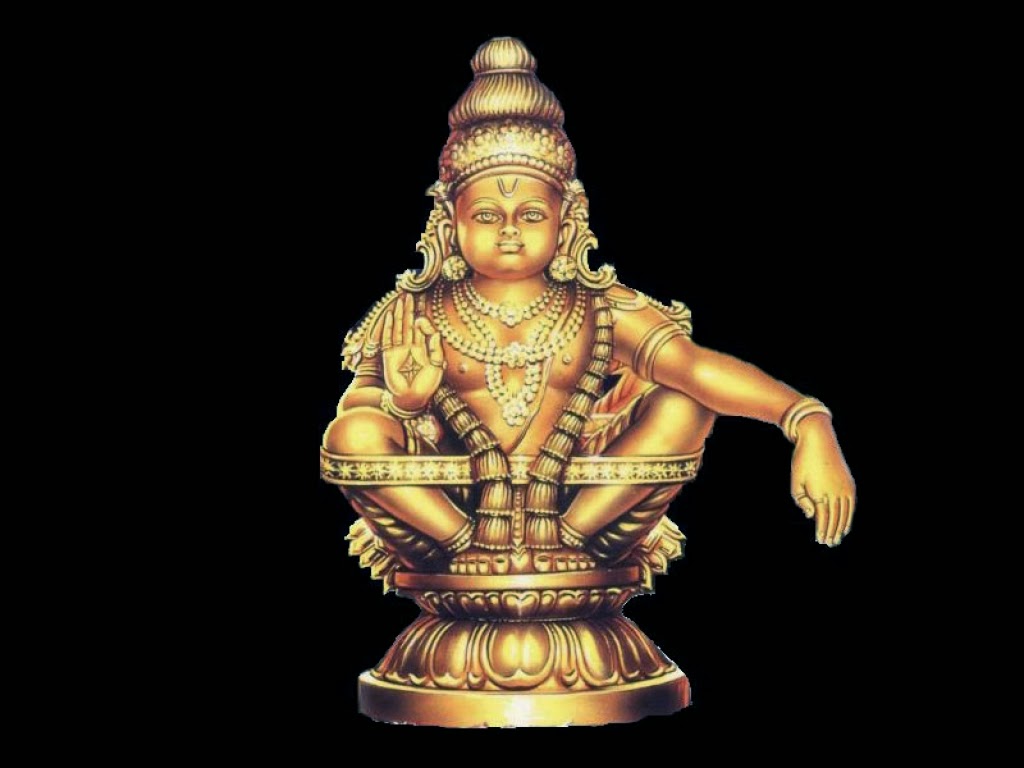
Eventually the king constructed a temple in the deep forest of Sabarimala as suggested by the Lord. During the consecration of the idol there was the presence of great sages like Agasthya, Parasurama and others. It was sage Parasurama who installed the idol of Lord Ayyappa seated in the Yogic pose Veeraasanam and showing the mystic sign of Chinmudra by the right hand. This is the Puraanic version.


Thursday, December 5, 2013

In this situation - how will you act

Om Sri Swamiye Saranam Ayyappa
Annadana Prabhuve Saranam Ayyappa

Scenario :
You have taken ayyappa swamy deeksha.You are located in a city like hyderabad. Assume that there was a bandh going on in the city and public transportation facilities (like buses, local trains) are not available.

It was evening time and you are on your way to sannidanam to perform your evening puja. you are driving a two wheeler motorcycle, in the turn around of a road, a person asks you lift, and you have given the lift to an elderly person. The person starts the conversation by greeting swamy, and asking how you are able to manage the bath of cold water with such cold. Then says that, he has come to hyderabad for the first time, he is a native of some other city, regarding his daughter assignment, he came to meet somebody here. He came to this location in an auto, and the address whom he has to meet which was in the purse was left out in the auto. All the money, his cards everything was there in the purse. He is a diabetic person, and didnt had anything from afternoon. He didnt had money to go to vijayawada where his daughter is studying her course. He wants to go to the railway station, and asked if swamy is going that way, can he be dropped nearby the railway station. Then there was absolute silence between both the persons till swamy dropped him.

Assume that you are in the position of the swamy who has given the lift

Questions :
a) How will you act in this situation
b) What is the right way to act in this situation
c) Do you think the person was genuine or a cheat
d) Do you think the person was the form of ayyappa swamy
e) What should be the attitude and thought process of the person taken ayyappa swamy deeksha in this scenario.


How the writer of this blog acted
The writer thought him to be a form of Swamy, took him to a hotel, offered him food, then gave him money to purchase a ticket to vijayawada and dropped him near the railway station.

After reading, how the writer acted in this scenario.

Questions :


a) Did the writer acted in a correct way.
b) Was the writer being cheated
c) After reading what the writer had done, what would you have done if you were in the same place.
d) What would be your answer if the elderly person was your father. Would you have acted in the same way.

Somebody might ask why the writer is writing all these, to show off his greatness or for any other reason. The answer is very simple, every one is having humanity inside them, someone may show it and someone may not show it. The writer wants to ignite that spark in every human being that they are human first, and they need to show humanity towards other living beings. This is the basic of taking swamy deeksha. This is the basic which is to be learnt in the swamy deeksha that every living being is a form of swamy and swamy is permeated all through this universe. If not to recognise the omnipresence of swamy, then what we are learning in the deeksha period.

Deeksha is not just for the 41 days, what all good we have learnt should be continued and implemented in our day to day life. It is the transformation which occurs from inside that should be reflected outside.


Harivaraasanam

Harivaraasanam 


Harivaraasanam Viswamohanam
Haridhadheeswaram Aaradyapaadukam
Arivimardhanam Nithyanarthanam
Hariharaatmajam devamaasraye

Sharanakeerthanam Sakthamaanasam
Bharanalolupam Narthanaalasam
Arunabhaasuram Bhoothanayakam
Hariharaatmajam devamaasraye

Pranayasatyakaa Prananaayakam
Pranathakalpakam Suprabhaanchitam
Pranavamandiram Keerthanapriyam
Hariharaatmajam devamaasraye

Thuragavaahanam Sundaraananam
Varagadhayudham Devavarnitham
Gurukripaakaram Keerthanapriyam
Hariharaatmajam devamaasraye

Thribhuvanaarchitham Devataatmakam
Thriyanam Prabhum Divyadesitham
Thridasapoojitham Chinthithapradam
Hariharaatmajam devamaasraye

Bhayabhayaavaham Bhaavukaavaham
Bhuvanamohanam Bhoothibhooshanam
Dhawalavaahanam Divyavaaranam
Hariharaatmajam devamaasraye

Kalamrudusmitham Sundaraananam
Kalabhakomalam Gaathramohanam
Kalabhakesari Vaajivaahanam
Hariharaatmajam devamaasraye

Sithajanaproyam Chinthitapradam
Srithivibhooshanam Saadhujeevanam
Sruthimanoharam Geethalaalasam
Hariharaatmajam devamaasraye.

----------------------******************----------------------------------

Another video of harivarasanam


Friday, November 29, 2013

GuruSwamy- Ayyappa Swamy Deeksha

Om Swamiye Saranam Ayyappa!
Om Guruswamiye Saranam Ayyappa!

Om nahama śivāya gurave 
Sac-cid-ānanda-mūrtaye 
Nisprapañcaya śāntāya 
Nirālambāya tejase 

Om. Salutations to the Guru, who is Shiva! His form is being, consciousness, and bliss. He is transcendent, calm, free from all support, and luminous.

From Guru Gita- When Parvati asking Lord Shiva to initiate her to the knowledge of guru, Lord Shiva answering thus

Durlabham trishu lokesu 
tacchrnusva vadāmyaham, 
Gurum vinābrahma nānyat 
satyam satyam varānane. 

(This knowledge) is difficult to obtain in the three worlds. Listen to it. I will reveal it to you. Brahman is nothing other than the Guru. O beautiful one, this is the truth. This is the truth. 

In a word, we can say that, as God created mother, because he cant be at all places, similarly ayyappa comes in the form of guruswamy to guide the people who are taking deeksha. In a way guruswamy is the reflection of ayyappa swamy. 

Guruswamy plays a vital role in the journey of a person who is taking ayyappa swamy deeksha. He is the person who gives us the ayyappa swamy deeksha by putting the mala(rosary) known as maladharana. Guruswamy is the person who can clarify all our doubts regarding deeksha. He will explain about the story of ayyappa swamy, will check our integrity and sincerity in taking deeksha. He will guide us towards Lord Ayyappa.

Ayyappa swamy deeksha has got a special significance because, to know about ayyappa it is not possible directly. The first question arises that he is the son of hari and hara, how can a child born for two males, there itself the question ends, because we dont have an answer for this question. Then there is no further scope to study or understand or answer. But there is a lot of significance, which can be known through Guruswamy only. So this entire deeksha deals with gurutattwa and tattwamasi, the supreme reality that we are one with the lord ayyappa who is sitting in the sanctum sanatorium of sabarimala temple.

Theoritically, we are just repeating this words "Tatwamasi" which is written on sanctum sanatorium of sabarimala temple, but are we able to experience the same. So the entire journey of taking deeksha till we see swamy at sabarimala is evoked around this concept. The moment we do maladharana under the guidance of guruswamy, at every stage, guruswamy helps us out by guiding us in the deeksha- like doing puja, making us do bhajans, clarify our doubts regarding swamy, and other aspects.

The Guruswamy is usually an elderly person who has undertaken pilgrimage to sabarimala not less than seven consecutive years in the traditional long route and had darshan of makara jyothi.

Guruswamy is the person who will tie our irumudi, help us make our sabari yatra peaceful and successful. Guruswamy is the person who will show us ayyappa and make us feel the blessings of ayyappa. Without Guruswamy, one cannot take deeksha, neither perform sabari yatra. The deeksha begins with guruswamy and ends with guruswamy. It is the guruswamy who will remove the mala after deeksha and sabari yatra is completed.

During the period of deeksha, one should be able to ask proper questions to guruswamy to clarify his doubts. The questioning should be genuine to know the fact and help us in reaching our goal of knowing the supreme reality. It should not be to check the knowledge of guruswamy. We should never let the ego enter into our hearts that we know better than guruswamy, because we might have read it at some place, or on internet or watched some movie or video or known through some other discussion from some other source.  Half knowledge is more dangerous, it makes us egoistic. If ego enters our heart that we know better than guruswamy, we need to think that it is the end of our deeksha, because the main motto of taking deeksha is to merge our ego at the lotus feet of the lord and become one with the cosmic consciousness realising the supreme reality tatwamasi.

He trains and prepares us  mentally and physically to reach this goal. The deeksha and its rules have been designed in such a way that if one properly follows them as per the guidance of guruswamy, then one is bound to reach this goal, if not immediately, but over the years he will reach this goal. Because, Lord ayyappa goal is to make us realise this supreme reality and he is sitting on the sabarimala hill to bestow the same. He will come down all the way to show us the path to reach this truth in the form of Guruswamy.

We should do service to guruswamy in all possible aspects, if guruswamy is satisfied means ayyappa will be satisfied and our sabari yatra will be successful and we will be bestowed with all the blessings of ayyappa. This will help us reach our goal quickly. The earlier we are able to merge our ego at the lotus feet of the lord, the earlier we will realise the supreme reality. This is only possible with being associated with guruswamy. Thats the reason, we need to do our deeksha in the presence of guruswamy being associated with him. Service to guruswamy will easily make us merge our ego at the lotus feet of ayyappa swamy. It is the "I" which is making us lose the harmony in our life. Why we are feeling happy the moment we see lord ayyappa at sabarimala, because he is the personification of bliss(ananda).

We will be blessed with such bliss if we are able to realise the supreme reality, and for this the one and only one way is to get associated with guruswamy and the way is only guruswamy.

There are lot of benefits if one does his deeksha alongwith guruswamy in his presence and in his association. One will have a chance to do service to guruswamy, can ask questions to guruswamy and get clarifications, even if we are unable to ask,if somebody else is asking, we can listen and get clarified. Most of things can be learnt by observing guruswamy and how he is doing the puja, bhajan and any other deeksha related activities. 

Right from taking achamana, to every minute detail in the deeksha, will have significance of some sort. It is always better to know the meaning of activity and then perform that activity. So who is the authority to clarify such doubts, it is the guruswamy. 

We need to be thankful always, because he is helping us in knowing the supreme reality by the grace of lord ayyappa. What more can be said,Words are less to describe about a guruswamy. 

In conclusion, we can pray for their blessings to make ayyappa happier who in turn will bless us in realising the truth which gives us ananda (bliss).

Om saha nāvavatu 
Saha nau bhunaktu 
Saha vīryam karavavahai 
Tejasvi nāvadhītam astu 
Mā vidvishāvahai 

Om. May we, Guru and disciple, be protected together. May we enjoy the fruits of our actions together. May we achieve strength together. May our knowledge be full of light. May we never have enmity for one another. 

Om Śanti! śanti! śanti! 
Om. Peace! Peace! Peace! 

Ayyappa is considered as the guru of all gurus. And as already discussed, he blesses us in the form of guruswamy. So we need to consider our guruswamy as our guru. Guru Gita extensively discuss about the greatness of a guru, one can go through guru gita to completely know about how one can serve guru to realise the supreme reality. A few of the verses are given below to show the greatness and how we need to treat our guru (guruswamy as the form of ayyappa our guru).

67. Akhanda-mandalākāram 
vyāptam yena charācaram, 
Tatpadam darśitam yena 
tasmai śrīgurave namah. 
Salutations to Shri Guru, who has revealed that state which pervades the entire sphere of this universe, which is composed of animate and inanimate objects. 
69. Yasya smarana-mātrena 
jñānam utpadyate svayam, 
Ya eva sarva-samprāptis 
tasmai śrīgurave namah. 
Salutations to Shri Guru, merely by remembering whom knowledge arises spontaneously. He is all attainments. 
70. Chaitanyam śāśvatam śāntam 
vyomātītam nirañjanam, 
Nśāda-bindu-kalśātītam 
tasmai śrīgurave namah. 
Salutations to Shri Guru. He is consciousness, which is eternal, peaceful, stainless, and transcends the sky. He is beyond nada (primordial sound), bindu (point containing the universe), and kala (manifestation of the world). 
71. Sthāvaram jangamam caiva 
tathā caiva carācaram, 
Vyāptam yena jagat sarvam 
tasmai śrīgurave namah. 
Salutations to Shri Guru, who pervades this entire world, consisting of the movable and immovable and also animate and inanimate 
72. Jnāna-shakti-samārūdhas 
tattvamālā-vibhūshitah, 
Bhukti-mukti-pradātā yas 
tasmai śrīgurave namah. 
Salutations to Shri Guru. He is firmly established in the power of knowledge and is adorned with the garland of tattvas. He  grants worldly fulfillment as well as salvation.

73. Aneka-janma-samprāpta- 
sarva-karma-vidāhine, 
 Svātmajnāna-prabhāvena 
tasmai śrīgurave namah. 
Salutations to Shri Guru, who by (imparting) the power of Self-knowledge burns up all the karmas acquired through countless lifetimes. 
74. Na guroradhikam tattvam 
na guroradhikam tapah, 
 Tattvam jnānātparam nāsti 
tasmai śrīgurave namah. 
Salutations to Shri Guru. There is no truth higher than the Guru, no austerity is greater than (service to) the Guru, no truth greater than the knowledge (of him). 
75. Mannāthah śrījagannātho 
madgurus trijagadguruh, 
Mamātmā sarva-bhūtātmā 
tasmai śrīgurave namah. 
Salutations to Shri Guru. My Lord is the Lord of the universe. My Guru is the Guru of the three worlds. My Self is the Self of all beings. 
76. Dhyāna-mūlam guror mūrtih 
pūjā-mūlam guroh padam, 
Mantra-mūlam guror vākyam, 
moksa-mūlam guroh krpā. 
The root of the meditation is the Guru’s form. The root of the worship is the Guru’s feet. The root of mantra is the Guru’s word. The root of liberation is the Guru’s grace. 


Om Guru Swamiye Saranam Ayyappa!


Thursday, November 28, 2013

Who is Ayyappa Swamy


Who is ayyappa swamy- An answer for this question cannot be understood directly and makes one get confused if things are not properly understood in the true sense. That is the main reason, why ayyappa swamy deeksha had to be taken under the guidance of a Guruswamy. This deeksha is more related to guru tatwa and tatwamasi. The journey begins for a person with taking mala (rosary) known as maladharana, under the guidance of guruswamy. Then for the next 41 days known as mandala deeksha, the person stays along with guruswamy by following the niyamas(rules and principles) of the deeksha. Through Guruswamy, he knows about ayyappa swamy and significance of  the rules which are to be followed , what are the various rituals he needs to follow during the course of  deeksha, what are the important milestones in the sabarimala yatra.

Ayyappa Swamy is called Aryan- meaning one who is to be respected and worshiped. On what basis, because swamy looks as a small boy, considering his age, does he needs to be worshiped. The answer is we need to worship him and respect him not because of his age, but because of his Jnana (Wisdom and knowledge). 

Every human being is an embodiment of the divinity. There is an ego factor "I" which covers our wisdom and makes us attach ourselves to the body consciousness rather the cosmic consciousness. One who reaches swamy will ultimately realise the truth that he is one with the divine or cosmic consciousness.  That is the meaning of the word Tatwamasi written on the sacred sanctorium of  Lord Ayyappa in the sabarimala temple. Tat twam asi- "That art thou," "That thou art," "Thou art that," "You are that," or "That you are,
is the ultimate reality one needs to know and experience.

So, the person who is taking swamy deeksha begins his journey from this individual "I" to merging into the cosmic "I". Its the realisation , the truth, which swamy is saying that you and I are not different, you and I are only one. It is on the same principle, we fill the coconut with ghee in irumudi and offer it to the lord. When the coconut of ego is broken, we get the ghee of divinity, using which we can do the abhisekham to the lord.
It is with the same thing we light the camphor, when we ignite the ego of camphor with the divinity of lord, then there will not be any trace of the ego "I". Swamy takes us into his fold and we will become one with swamy. See a camphor after it has lit, there will not be any trace or leftovers.

The entire deeksha has rules and regulations in preparing a person towards this goal. The first thing is calling everyone as swamy and seeing him as the form of swamy. Then start looking mother in every woman, including wife by calling them as malikamata. Abstinence from worldly thoughts and starting the journey inwards to the soul. The end result for all this process is bliss (ananda) which cannot be described, explained , seen or shown but only can be felt and experienced. Words are less, one have to experience themselves.

Though, its not a overnight journey in realising, if one enters into the fold of swamy and doesnt leave swamy, then one day he is sure to achieve this goal. Every activity in Swamy deeksha, beginning from maladharan to irumudi, and the sabari yatra ends at the sanctum sanctorium of ayyappa swamy at sabarimala. The deeksha will be completed once we visit swamy at sabarimala. Every event in our journey towards swamy will chalk out us towards this goal. All the activities either directly or indirectly motivate or transform us towards this goal. One has to start looking at every activity from this perspective, and for any doubts ask Guruswamy regarding the same. Guruswamy is considered to be the reflection of swamy ayyappa, and as a guru, he can clear all our doubts and show us the path at every stage in our deeksha and our sabari yatra. Usually Guruswamy is a person who had visited sabarimala for 18 times, who has the complete knowledge and had realised and experienced this truth.

Presently, so many people are going to sabarimala by taking ayyappa swamy deeksha, because swamy is the authority for purnatwam(completeness) and pushkalatwam(abundance). At the initial stages, we out of our ignorance ask swamy for various materialistic desires. He will grant and fulfill all our desires at the initial stage, so as to attract us towards him. But he is also the guruvan guru, meaning the guru of all gurus. And the ultimate goal of a guru is to show the light of truth who are struggling in the darkness of ignorance, show the supreme reality to the people who are lost in this materialistic world of "I". But as time passes with our association with him, we will try to realise that there is no happiness in these materialistic world, and all the relations, things, ideas, everything we find in this world are temporary and the happiness they give is temporary. The only ultimate truth and the never ending bliss is only possible by merging the individual "I" at the lotus feet of the lord by realising the supreme reality "Tatwamasi". This is the essence of a human life, which we need to achieve, and that is the reason for one taking ayyappa swamy deeksha- though knowingly or unknowingly- if once, we take deeksha, though we leave swamy, swamy will not leave us, till we reach our goal. That is the mercy of Lord Ayyappa.

From the history of ayyappa swamy, and the places which are enroute to the sabarimala we can see the practical view of the same underlying thought that all is one. From our deeksha rules, we see that we have to consider everyone as swamy. And we need to attend for the puja or bhiksha if any swamy is inviting irrespective of his caste,creed,race,status etc. Hunger is the same for everyone irrespective of their caste,creed,status,race etc. So we need to offer everyone food, who ever is stepping into our house, irrespective of whether we invite or we dont invite. It is the same for any person who has taken swamy deeksha, he needs to attend the puja and take bhiksha at the place where swamy puja is being performed, irrespective of whether he had been invited or not. Once they come to know that there is a swamy puja being performed, then they should attend it.

Then at Erumely,we need to offer prayers to vavar, though by caste, he is a muslim, he was the main person associated with ayyappa swamy, and got a significant place in the sabari yatra. Our sabari yatra begins from this point onwards only, by offering prayer, doing petta -thullal and proceeding to sabarimala.

In Conclusion, we can say that What attracts millions to this vibrant centre of Divine Power, is neither mythological stories nor historical importance, but the very personal experience of spiritual solace and harmony. In a historical assessment what is overlooked is the very essence the blending of many positive aspects of religious concepts and spiritual disciplines that gives a broad based practical impetus to the striving of man to know himself and to find a greater meaning to his life.


Monday, November 11, 2013

Chaganti Koteswara Rao Pravachanam on Swamy Ayyappa

For all those who can understand telugu, and would like to know the spiritual insights on the birth of Ayyappa Swamy from our epics and puranas, please visit the link below and listen the pravachanam given by Brahmasri Chaganti Koteswara Rao Garu.

https://sriguruvaani.net/

About Brahmasri Chaganti Koteswara Rao Garu

Brahmasri Chaganti Koteswara Rao an eminent pravachana chakravarthi, born to punya dampathulu late sri Chaganti Sundara Siva Rao garu and late smt Suseelamma. Presently he is working in Food Corporation of India, Kakinada. A silent reader of puranams and blessed with Saraswathi kataksham and started giving pravachanams on puranams extempore and proven his spectacular command on spiritual pravachanams on various purnanams and mythologies like Srimad Ramayanam, Srimad Bhagavatham Soundaryalahari, Lalithasahasranama strotram etc.,

Brahmasri Koteswara Rao garu has delivered discourses for 42 days continuously at Kakinada on sampoorna ramayanam during 2005, Sreemad Bhagavatham for 42 days during 2006, Sivamahapuranam for 30 days during 2007 and Sree Lalitha Sahasranama Stothram for about 45 days during 2008 . In addition he gave numerous pravachanams on various topics throughout the country.

He mesmerizes the audience with well refined reciting and thought provoking citations from various puranams extempore.

Brahmasri Koteswara Rao is a gifted personality with sarada kataksham who ensures of great spiritual anandam(bliss) to all the audience.

He has been felicitated with citations like "UPANYASA CHAKRAVARTHI", "SARADA JNANA PUTRA"...etc

One can visit the site to listen all of his pravachanams

https://sriguruvaani.net/